Friday, April 22, 2011

What a Coincidence

I just wrote a post about people's attitudes toward vaccination --- particularly the extent to which people worry about vaccines causing autism, and whether that worry leads them to skip recommended shots --- and now I see that Sarah was also moved to write something vaccine-related.

From her Tumblr*:

Pro-vaccine advocacy is not the same as advocating for the rights of autistic people or being anti-ableism. Pro-vaccine advocacy can sometimes repeat the same pernicious, ableist myths about autistic people which are so embedded in the anti-vaccine movement.
She's absolutely 100% right; where the anti-vaccine activists' rhetoric implies that it's better for one's child --- and other people's children, for that matter --- to contract potentially life-threatening, vaccine-preventable diseases than to be autistic, the pro-vaccine camp usually responds with "Nobody wants to have an autistic child, autism is a terrible tragedy and we should hurry up and find a cure, but ..."


It's a conciliatory tactic, meant to convey empathy for the clearly-distraught parents who blame vaccines for their children's disability. And that's good, as far as it goes; everyone deserves to be treated respectfully, and to have their feelings acknowledged and respected when they're debating emotionally-charged subjects.


A discourse that rests on the premise that autistic people should not exist isn't one that respects autistic people. It also implies that there are no autistic people participating in, or watching, the debate, and that's just not true. We're here, we have a personal stake in these issues; we deserve to be equal participants in the public discourse around autism.

*I can link to the post itself, but currently if I do that you're not able to read it --- other text overlaps with it. This is one of the many reasons Tumblr fails to appeal to me.

Thursday, April 21, 2011

Poll Data on Vaccines Looks Contradictory, But Isn't

ResearchBlogging.orgYesterday I ran across two seemingly contradictory factoids about public opinion on the autism-vaccine issue: this column in this month's Scientific American cites a poll* finding that just under half of U.S. adults either believe vaccines cause autism or aren't sure whether they do or not, while Left Brain/Right Brain reports on survey data** analyzed in two articles (full text here and here) in Pediatrics that found 79% of U.S. parents believe vaccines are safe.

So, which of these is true?

I'll start by pointing out that the subset of people who said they were "not sure" about the vaccine-autism issue could probably also fall into the subset of people who said they thought vaccines were safe in the other survey --- people's positions on issues can be pretty elastic, depending on how questions are asked and what kind of answers they think the pollsters want to hear. I think people who fall somewhere in the middle might have even more wiggle room than those who come down more strongly on one side or another.

The undecided group in the Harris/HealthDay poll, at 30% of respondents, was quite a bit bigger than the group professing a belief that vaccines cause autism (18%).

Thus, the proportion of all people who don't actively believe that vaccines cause autism in that survey is 82%, similar to the 79% of people who said they considered vaccines to be safe in the survey from two years ago.

Also, the two surveys sampled slightly different subsets of the U.S. population: the Harris/HealthDay poll was open to anyone over 18 (n = 2,026), while the two Pediatrics articles restricted their data set to respondents with minor children (n = 1,552). One of the articles went further, using only data from parents of children younger than 6 (n = 475).

Compared with the general population of the U.S. (reflected in 2010 census data), the group of people studied in the two Pediatrics articles is younger (the all-parents group was split about 60/40 between people under 40 and people 40+; two-thirds of the parents of young children were under 35; in the U.S. as a whole, a little less than half of all people, and about 60% of all adults, are older than 40), a lot richer and more likely to be female (split about 60/40 in favor of women).

What most interested me was the implication, in the article on parents of young children, that some of the people who think vaccines are generally safe, and believed vaccination was important for a child's health, are also worried that vaccines might cause autism:


Parents reported their attitudes regarding the safety and necessity of vaccines (Tables 2 and 3). The majority of the parents were either confident or very confident in vaccine safety (79.0%) and believed that vaccines are important to children's health (79.8%). Similarly, 73% of parents somewhat or strongly believed that the benefits of vaccines outweighed the risks. ...

Parents were asked to respond to a series of 11 potential vaccine-related concerns and were also given the opportunity of stating that they had no vaccine-related concerns (Table 4). Just more than one-fifth (20.8%) of the parents reported that none of the 11 issues listed were of concern to them. The most common concern reported by the parents was that it is painful for children to receive multiple shots during 1 doctor's visit (44.2%). Other concerns reported by >25% of the parents included their child receiving too many vaccines in 1 doctor's visit (34.2%), vaccines causing fevers in their child (28.3%), children getting too many vaccines in their first 2 years of life (27.8%), and vaccines causing learning disabilities such as autism (26.2%).

The article's authors suggest that these parents are probably weighing the potential risk of autism against the protection from disease, and choosing to vaccinate despite their misgivings because they think the benefits outweigh the risks. (Data from the Harris/HealthDay poll would also tend to support this idea of a cost-benefit analysis; even among people who believe that vaccines can cause autism, a majority thinks schools should require children to be vaccinated).

The other article, the one that studied all parents of minor children, also looked into what sources parents considered credible in the matter of vaccine safety.

Overwhelmingly, the person they trusted most was their children's doctor (76% said they trusted their children's doctor "a lot," 22% said "some" and only 2% said they did not trust their children's doctor); just as overwhelmingly, people put very little stock in what celebrities have to say about vaccine safety (in a clean reversal of the figures for doctors, 2% of parents said they trusted celebrities "a lot", 24% said they trusted them "some", and 74% did not trust them at all). For all the other types of people --- health-care providers apart from their children's doctor, government officials, friends and family, and parents who believe their children were harmed by a vaccine --- most people said they felt "some" trust. Similarly, of the people who look at media relating to vaccine safety, most placed "some" trust in all of the media categories listed: medical organizations' websites (the only category that also had a large number of people saying they trusted it "a lot"), government websites, newspaper or magazine articles, TV, vaccine manufacturers' websites and anti-vaccine websites.

These survey results suggest to me that people aren't the gullible sheep skeptics often accuse them of being. They are wary of anecdotal evidence, give more weight to experts' opinions than to laypeople's, and give the most weight to those authorities they consider neutral, or to have their child's best interests specifically in mind. Also, even without an extensive grounding in virology, immunology or epidemiology, they seem to grasp the importance of universal vaccination in maintaining herd immunity.

People are wiser than the conventional wisdom gives them credit for being.

Freed, G., Clark, S., Butchart, A., Singer, D., & Davis, M. (2011). Sources and Perceived Credibility of Vaccine-Safety Information for Parents PEDIATRICS DOI: 10.1542/peds.2010-1722P

Kennedy, A., Basket, M., & Sheedy, K. (2011). Vaccine Attitudes, Concerns, and Information Sources Reported by Parents of Young Children: Results From the 2009 HealthStyles Survey PEDIATRICS DOI: 10.1542/peds.2010-1722N


*Poll conducted by Harris Interactive and HealthDay, on January 11-13, 2011

**The annual HealthStyles survey, conducted by the CDC and the public-relations firm Porter Novelli, throughout the month of January in 2009

Monday, April 18, 2011

More on "The Geneticization of Autism"

In Saturday's post I quoted at length from Kristin Bumiller's 2009 article "The Geneticization of Autism: From New Reproductive Technologies to the Conception of Genetic Normalcy", which explores the social and political implications of a largely genetic understanding of illness and disability. I think almost all the ideas she develops in that article have merit, especially her points about the limitations of a public-health system modeled on the larger consumer economy, and about coercive, eugenic aspects of genetic testing as it is used today in the U.S.

But there was one part of the article that really bothered me, and that's what I'm going to talk about in this post.


Here's the relevant passage:

The most divisive expression of dissent to geneticization is found among groups that seek to document environmental causes of autism, such as the use of mercury in vaccines. These outsiders, dubbed the "Mercury Moms," are engaged in insurgent activism against the medical establishment and most directly the Centers for Disease Control and Prevention (CDC). They claim that the CDC has perpetuated a cover-up of medical evidence confirming the link between thimerosal (a mercury preservative previously used in many childhood vaccines) and the increase in autism. In stark contrast to professionals, parents and activists who subscribe to a genetic understanding of autism, the Mercury Moms are frequently characterized as hysterical and antiscience (Kennedy 2007; Desmon 2008). As Ken Plummer (2001) has suggested in his account of what he calls "intimate citizenship," this kind of very public debate over controversial issues demonstrates that there is something much grander at stake than the validity of scientific research. For the Mercury Moms, their activities fulfill their role as protectors and provide assurance that they have pursued all avenues to help their children. As activists, the Mercury Moms are often marginalized by the media, national autism advocacy groups, and the professional establishment, not only because they dispute official information but also because they amplify the fears of all parents about the possibility of seemingly benign choices, such as complying with childhood vaccination recommendations. Their advocacy is even seen as dangerous because it could lead to widespread rejection of vaccinations that prevent the resurgence of deadly diseases. In part, the marginalization of the Mercury Moms results from their own tendency toward absolutism, but at the same time there is little mainstream recognition of scientific evidence that supports the possibility of links between exposures to toxins and autism (DeSoto and Hitlan 2007).


I know she's writing an academic paper, and a social-science one at that, so she has to be neutral and objective in her language in a way that a blogger doesn't, and that the truth or falsehood of any given hypothesis about autism's root causes is beyond the scope of her article, but it still reads to me like she's giving the much-discredited thimerosal hypothesis equal weight with the prevailing notion that genetics probably play a role in autism.

(I also think she greatly overstates the extent to which most autism researchers think of autism as being 100% genetic*, or the extent to which genetic variations associated with autism are necessarily inherited.)

Most troubling to me is this phrasing, "... environmental causes of autism, such as the use of mercury in vaccines." Using what may be the most exhaustively debunked hypothesis ever to be proposed as an explanation for autism as an example of bias against research into possible environmental causes, triggers, or correlates of autism strikes me as misguided.

It equates two statements --- "Environmental factors may have something to do with autism, either on their own or in concert with genetic predispositions" and "Mercury in vaccines causes autism" --- treating them as equally viable avenues of inquiry, and implying (by treating the latter as merely an instance of the former, broader category) that refusal to entertain the vaccine hypothesis means that one's mind is closed to all environmental hypotheses of autism. That's just not true.

I don't totally hate her analysis of the "Mercury Moms" movement --- I think she's right that they illustrate the lopsided nature of the partnership between the medical establishment and popular health movements, and also that they represent the loudest dissenting voice to the autism-is-genetic conventional wisdom, and that they are often caricatured in sexist tropes, as hysterical, ignorant women. But I think that if she wants to make the point that the autism-research establishment is ignoring potentially fruitful research into environmental factors, she should not use this group to illustrate it; the alternative explanation of autism that they espouse has been investigated, over and over again, and come up empty. Not wanting to pursue a dead end isn't the same as ideological narrow-mindedness, and many of the researchers who dismiss the Mercury Moms with such contempt are also looking into other environmental factors for a possible link with autism.

I can see why this group appeals to her, since, along with loudly repudiating the genetic understanding of autism, and claiming that a ubiquitous, expert-approved medical practice is actually causing the spread of autism, they are laypeople and mothers rather than doctors or academic researchers. They hit all the right notes as far as opposing the "genetic citizenship" model is concerned; I just don't think you can put aside such things like the ever-increasing weight of evidence against their claims, their indifference to this evidence, and the public-health consequences of their anti-vaccination agenda, to say how much of a role the geneticization narrative also plays in pushing them to the margins. I'm certainly willing to believe it's a factor, but I think the biggest factors are the other ones I mentioned.

Bumiller admits as much in the last sentence of the paragraph I quoted: "In part, the marginalization of the Mercury Moms comes from their own tendency toward absolutism ..."

The other thing that annoyed me somewhat was the positioning of two factions that differ on the matter of what causes autism and what kinds of things are likely to be useful in treating, curing or preventing autism, but that agree in their understanding of autism as a disease that ought to be eradicated, as the two opposite poles of this debate on what autism is and what society ought to do about it. There's a third facet as well, one that I know Bumiller knows about, because she wrote an earlier article about it, and mentions it in passing in this one; it's the neurodiversity movement, which she glosses over as another proponent of the idea that autism is genetically determined.

Many of us do think autism has a genetic component, and some of us think it's entirely genetic and has been around for a very long time, but for the most part we don't give a lot of weight to the matter of what causes autism. It's not critical to our objective, which is acceptance and integration into mainstream society.

And there are premises of the "genetic-citizenship" model that we question, or outright reject, just as the Mercury Moms reject the idea that doctors always know best. Many of us reject the ethic of individual self-care that the genetic-citizenship model revolves around, and we certainly reject the idea that it is every citizen's duty to prevent disabled people from being born. We also have a very fractious relationship with the major autism-advocacy organizations, as a search on the term "Autism Speaks" on most autistic people's blogs will tell you.

It seems to me that this article would've been much the richer had it included more of this stuff, maybe comparing and contrasting the ways in which the Mercury Moms and the neurodiversity and disability-rights movements uphold or challenge (because both groups do some of both, I think) the doctrine of genetic citizenship.

Bumiller, K. (2009). The Geneticization of Autism: From New Reproductive Technologies to the Conception of Genetic Normalcy Signs: Journal of Women in Culture and Society, 34 (4), 875-899 DOI: 10.1086/597130


*Clearly there are plenty of researchers who think genetics is the major factor contributing to autism, and some who do think of autism solely in genetic terms, but the idea that environmental factors also play a role is hardly out of the mainstream. In fact, there are currently several large studies under way of possible environmental correlates of autism, in part because the environmental issue hasn't been as well-explored as the genetic one, and researchers know that and are looking to change it. That hardly seems to me like the idea of autism having environmental triggers is being suppressed by the scientific and medical communities ...

Why is it ...

... that Blogger always seems to have some weird auto-formatting going on that overrides whatever I'm trying to do? Most of the time, it automatically skips a line whenever I put in a line break, but in my last post it's been ignoring my line breaks completely, and showing my post as a huge unbroken wall of text. (I had this problem with WordPress, too, when I would sometimes write for Here Be Dragons).

Saturday, April 16, 2011

Making the Genes Fit: Genetic Explanations for Autism and Their Political Implications

EXECUTIVE SUMMARY: Political-science professor Kristin Bumiller has written another long article on the politics of autism; while her earlier article focused on the neurodiversity movement, this article is mostly about mainstream autism advocacy in the vein of Autism Speaks. In it, she argues that mainstream discourse about autism assumes that autism is a genetic condition, and that this assumption is insufficiently backed by evidence. She spends most of the article detailing the political implications of this assumption, which are 1) funnelling most activism on the part of families of autistic people into relatively narrow channels of corporate-philanthropic fundraising for biomedical autism-research initiatives, rather than calling for broader social changes that might benefit autistic people; and 2) making disability an individual, rather than a social, issue.

She introduces several concepts over the course of developing those themes: "geneticization" --- a process by which the preferred explanation for sickness and disability is that some people are genetically susceptible to certain illnesses; "genetic citizenship" --- an ethic of individual responsibility for health, and for knowledge of one's genetic predispositions; and "life optimization" --- a strategy for making the most of one's (or one's child's) life chances given a certain set of genetic predispositions. She makes the case that the latter two of these things are logical responses to a genetic understanding of disease and disability in a "neoliberal welfare state" like the U.S., but also that they are inherently coercive and inegalitarian.
____________________________________________________

Looking through the online archive of the women's-studies journal Signs, I found another article on autism by the political scientist Kristin Bumiller. (I did a series of three posts a while back about her 2008 article "Quirky Citizens: Autism, Gender and Reimagining Disability," which I thought made a lot of really good points). The more recent article, published in the summer 2009 issue of Signs, is called "The Geneticization of Autism: From New Reproductive Technologies to the Conception of Genetic Normalcy."

That odd word, "geneticization," gives you a clue as to the article's main premise: it implies treating autism as if it were genetic when it may or may not really be genetic.

Here is how Bumiller introduces the term and relates it to autism:

The term "geneticization" refers to the growth of genetics as a means to account for and explain health and disease and the process by which biological conditions constitute social definitions of normality and abnormality (Lippman 1991, 18). Abby Lippman coined this term in a feminist analysis of the growing influence of genetic determinism on public policies and private practices regarding pregnancy and health care and to emphasize the gender, race, and class implications of this trend. In particular, Lippman identified the need to study how genetic interventions affect health management in a variety of economic and social contexts. Feminist scholars have been wary of the coercive and normalizing power of medical professionals, yet they have also demonstrated the complex implications of biomedical advances. As Donna Haraway has persuasively argued, it makes little sense to be "simply oppositional" in response to this new technological future because we are deeply implicated in scientific progress (Haraway 1997, 3).

The shift in the autism field was first generated by the efforts of parents with autistic children, who were responding to regressive beliefs within the medical field. The scientific and popularized explanation for autism prior to the 1980s perpetuated a theory that pathological mothering was at the root of the disorder. Bruno Bettelheim (1979) is especially noted by critics for his view that childhood disturbances associated with autism did not arise spontaneously but resulted from extremely abnormal mother-child relations. Bettelheim's understanding of the condition is drawn from the seminal work of Leo Kanner (1943), who distinguished autism from schizophrenia as an innate or inborn disturbance of affective contact but also thought that the notable coldness and formality of the parents usually had some effect on the development of the condition. The hypothesis that autism can be attributed to a general lack of maternal warmth is called the "refrigerator mother" theory of autism, and it did not come under direct attack until Bernard Rimland criticized it in his 1964 book Infantile Autism: The Syndrome and Its Implication for a Neural Theory of Behavior. Both a parent of a child with autism and trained as a physician, Rimland undertook scientific work and activism that played a central role in recasting autism as a medical condition with distinct psychological symptoms that could potentially be remediated through diet and other therapies. In an era when parents of children with disabilities were beginning to organize and seek legitimacy, parents of autistic children embraced new biological explanations.

She goes on to describe a gradual narrowing of focus from "biological" explanations to specifically genetic ones, starting when researchers conducting twin studies found a strong pattern of heritability in autism. Later research identified a "broad autism phenotype" in parents and siblings of autistic children*, which added to the impression that it runs in families. But research into specific genes has failed to find much --- many candidate genes have been found, but each one only accounts for a tiny fraction of cases of autism. However, this review on the genetics of autism, published this month in Genetics in Medicine, estimates the total proportion of autistic people who have one of the genetic variations discovered so far at about 25%, which is actually a decent-sized chunk. Couple that with the relative newness of microarray-based comparative genomic hybridization --- the technique responsible for turning up a lot of these candidate genes --- and you see that it might be a bit premature to declare genetic research moribund**.

Kristin Bumiller thinks the continued assumption that autism must be a genetic condition has persisted beyond what the available evidence argues for, and that the idea that it may have environmental triggers is dismissed too readily. (I think the issue of whether the case for a genetic basis for autism is overstated or not is a bit more complicated; see above paragraph).

I do not argue with her assessment of the different political implications of genetic vs. environmental causes of developmental disability; if the former idea (i.e., that it's genetic) is widely believed, then each citizen is responsible for knowing hir own genetic status and making whatever reproductive choices follow from that status, while, if autism and other developmental disabilities are thought to be triggered by some environmental contaminant, then the responsibility falls to the government to enact stricter controls on neurotoxic pollutants. (Both of these scenarios presume a social context whose primary emphasis is on preventing, rather than accommodating, disability. In a less ableist society, deciding whether or not to have children if you're a carrier of [whatever] genes would be much less fraught with emotion and social pressures, although I think we'd want to limit pollution even if we weren't constantly told that developmental disability is a tragic waste of life).

Bumiller calls the individual-responsibility scenario "genetic citizenship": you become a member of a community of people affected by a given genetic disease, and that community advocates for research funding and participates in studies to help speed the development of cures or therapies:
The concept of genetic citizenship has been introduced to describe individuals in the age of biomedicalization who engage in a new style of activism related to their inheritable identities and differential embodiment (Heath, Rapp, and Taussig 2004). This concept is most frequently applied to situations in which individuals and family members affected by a genetic disease come together and take an active role in fundraising, advocating, and influencing scientists in the hope of finding a cure. In the past decade numerous disease-specific advocacy organizations have exercised significant influence over research priorities, affected capital allocation, sponsored gene banks, and demanded collaboration in the pursuit of real progress for people living with genetic diseases (Terry et al. 2007). This participation also takes advantage of new networking opportunities created by the Internet and the emergence of virtual communities. These citizens are seen as having cast off the role of passive patients to become active consumers of health services. As collectivities they have strived to maximize their influence on the development of new science, technology, and medical knowledge (Rose 2007, 23).

Autism advocacy provides an important vantage point from which to evaluate the presumed desirability of genetic citizenship because its activism is complicated by intense controversies about the significance of the genetic link and about the social identities of autistics. With the expansion of biomedical research in the field, much autism advocacy has shifted from promoting the well-being of affected families and children to searching for a cure. These new organizations, now consolidated under the banner of Autism Speaks, primarily promote biomedical research and are modeled on other fundraising campaigns that draw attention to the plight of people who suffer from rare diseases. ...
...
Prior studies of genetic citizenship have raised concerns about how the victories of new genetic movements may reflect a questionable convergence of individual interests and market forces and have noted how research priorities are driven by profit motives (Duster 2003a). Similar issues arise in the context of autism; much of this research is conducted in collaboration with high-profile genetic laboratories and large biotech corporations such as deCODE Genetics. This research is given priority despite uncertainty about whether and how genetic information will eventually be useful for pre- or postnatal genetic screening, diagnosis, or treatment methodologies. Both the irresolution about the potential benefits of genetic research and the oversimplifaction of its significance in the media diminish the power of consumers and the general public to either shift priorities or call for more transparency on the part of medical professionals. Moreover, the current focus on instrumental (and uncertain) goals rather than more broadly framed issues of social justice and welfare limits the role of disease-specific advocacy organizations in setting priorities (Stockdale 1999). Specifically in the case of autism awareness, it has been shown that since public discourse has focused on the medical paradigm --- particularly on efforts to find a cure --- there has been less focus on the rights and social welfare dimensions of the issue.

So there are good and bad things about this trend toward people organizing and cooperating with pharmaceutical and biotechnology companies to raise money and set research priorities. People are able to find other people --- whole communities of people --- who share their circumstances, and can thus pool their knowledge, resources and coping skills in ways they couldn't before, when each person essentially had to work everything out for hirself. That's a good thing; it's also a good thing that people affected by various conditions have a way to tell the scientific and medical communities what they need most.

What's not so good is the fact that the "partnership" between grassroots advocacy groups and corporations is so lopsided; this restricts disease-based activism to the corporate-philanthropic model of fundraising for biomedical research, when it might include that and campaigns for social changes geared toward creating a healthier society.

The other things Bumiller thinks are bad about the "genetic citizenship" model are its tendencies to coerce people into making certain health and reproductive choices, to exacerbate social and economic inequalities, and to put a heavy burden of responsibility on women as guardians of their families' health:
[D]isability activists have illuminated the implications of wide-scale genetic screening for the devaluing of disabled lives, particularly as the lines between state policy and individual choice are becoming increasingly blurred. Despite the well-established obligation of physicians and genetic counselors to provide nondirective advice, studies have found that patients were given information that imposes professionals' views about the usefulness of genetic knowledge and the parental responsibility to promote fetal health (Rapp 1999). This research has shown that professionals effectively delivered the message that the only rational choice is to give birth to a "normal" child. Genetic testing is now understood as a necessary component of preventative public health programs, largely as a result of the trend toward universalized testing and mandatory screening of newborns (van den Daele 2006). This shift has transformed prenatal testing from an option individual women are given to lower their risk of having a child with a genetic defect to a system of reducing overall health problems in the population (Ward 2002). ...
...
The research on prenatal counseling has also shown that professionals often frame genetic testing as necessary for socially responsible parenting. One study found that counselors presented prenatal testing as something women need in order to become good parents (Lippman 1991). In this sense, good parenting is about having the knowledge and resources provided by this testing and then following through in a socially responsible fashion. As genetic testing is fully incorporated as a standard of care for pregnant women, the act of refusal is no longer about the assumption of individual risk. Now, the noncompliant woman has failed to take advantage of an important opportunity to maximize the life chances of her child. Such actions are likely to be seen as contrary to good citizenship in an age of biopolitics, where the technologies of biomedicine have created a context in which "biology is not destiny, but opportunity" (Rose 2007, 51) and the desired course of action is to follow a strategy of life "optimization" (6). This strategy, according to Nikolas Rose, is "not eugenics but is shaped by forms of self-government imposed by the obligation of choice, the desire for self-fulfillment, and the wish of parents for the best lives for their children." He goes on to say that "its logics and its costs deserve analysis on their own terms" (69).

To see this as part of a new regime of choice is to fail to recognize the unintended consequences of life optimization in regard to the regulation of normalcy. A recent ethnographic study on the influence of new genetic knowledge on Belgian insurance companies aptly illustrates this dynamic at work. Ine Van Hoyweghen, Klasien Horstman, and Rita Schepers (2006) investigated how insurers take account of predictive medicine in the process of determining premiums. They describe the companies' decision making as a process of "making the normal deviant" because when insurers make judgments "the margin of being normal is actually quite small and the scope for deviation is quite wide" (Van Hoyweghen, Horstman, and Schepers 2006, 1229). They find that when insurers rate people with genetic predispositions they put extra emphasis on how they have managed their health. ... [I]nsurers impose a greater responsibility for optimally managing one's health on people with known risk factors. The authors' conclusions have serious implications for the social costs of life optimization: "Instead of a 'genetic determinism,' it seems more plausible that we are all subject to different levels of susceptibility. ... As a consequence, ... the individual's lifestyle habits, preventive initiatives and compliant behavior in relation to these susceptibilities could be stressed more" (Van Hoyweghen, Horstman, and Schepers 2006, 1233). The actuarial process imposes a norm that defines suitable lifestyles for people with risky genes. This creates an incentive system for genetic "deviants" to conform to normal expectations of proper lifestyles in order to satisfy social expectations.
...
The concurrent forces of life optimization under conditions of biomedicalization and demands for personal responsibility in a neoliberal welfare regime make the determination of a disabled person's worthiness central to the process of gaining public health resources. The rights afforded to people with disabilities are more available to those who are good genetic citizens and can demonstrate their strict compliance with social norms. For example, special education provisions rely on eligibility and service determinations that are individualized and ad hoc rather than derived straightforwardly from medical diagnosis. As a consequence, parents with poor genetic literacy often have trouble convincing schools that their children's behavior is the result of a biological condition rather than their bad choices as parents. In social security disability determinations, each case is processed according to subjective criteria used to measure a person's ability to work. Studies show that success in claiming disability depends on a person's ability and willingness to persevere through the application process (Bilder and Mechanic 2003). Since most claims are routinely denied and these denials lead to a lengthy appeals process, only those who are unusually skilled at conveying medical knowledge, or at enlisting the assistance of medical professionals, are likely to have their applications eventually approved.

These systematic processes have the effect of distinguishing between disabled people who are at low risk and those who are at high risk for becoming dependent on the state. Social policies that rely on dividing people up according to risk groups also cut against the organic sense of solidarity that develops among people with disabilities (or among their advocates and caretakers). These systems of classification rely on distinctions that are often contrary to a dynamic and inclusive sense of citizenship among people with disabilities. The overall effect of a person's genetic status interacting with other forms of inequality is to create conditions of "cumulative social and economic disadvantage" and consequently to reduce opportunities to participate in civic life (Kelly 2002, 181).
I don't think Bumiller is endorsing any kind of conspiracy theory, or that she believes some secret cabal of biotechnology executives ever held a meeting and drew up a plan to seize control of the emerging wave of health activism. Similarly, I don't think she thinks doctors and genetic counselors are trying to "regulat[e] normalcy"; both of those things just happened, as new technologies and social movements were assimilated into a corporate-dominated, individualistic society. No human masterminds or conspiracies --- indeed, any planning or intention at all --- need ever be involved.

These are all the things I agreed with in Bumiller's article; there's also some stuff I have problems with (besides my differing assessment of the state of research into the genetics of autism), which I will write about in a later post.

Bumiller, K. (2009). The Geneticization of Autism: From New Reproductive Technologies to the Conception of Genetic Normalcy Signs: Journal of Women in Culture and Society, 34 (4), 875-899 DOI: 10.1086/597130


*Not everyone who studied relatives of autistic children found this broad autism phenotype --- this 1994 study of 44 families with multiple autistic children found that the non-autistic siblings did not display any noticeable autistic-like traits; "in the vast majority of cases, children [were] either clearly affected or clearly unaffected". But from what I can see, most of the studies published on this topic did find evidence of a broad autism phenotype, although positive results may be overrepresented among published papers just because positive results are more often published than negative results.

**You could still criticize it on other grounds, from the potential for eugenic applications of genetic research to the questionable wisdom of using limited research funds to pursue such theoretical questions ("Where does autism come from?") rather than finding out what works to improve autistic people's lives and enable them to participate in society to a greater extent.

Tuesday, April 12, 2011

Autism Speaks Interrupts My Etsy Browsing

I was poking around on Etsy when I spotted this:

A beautiful puzzle piece inscribed with the word love. This necklace is meant to show support and awareness for autism of all types.

...


I will be donating 100% of the price of this necklace to Autism Speaks to fund awareness and research.

This annoyed and saddened me, for reasons that will be obvious to anyone who's been following the neurodiversity blogosphere for any length of time.

(If you haven't, here's a brief list of the things autistic self-advocates don't like about Autism Speaks: eliminationist rhetoric*; non-representation/token, non-policy-setting representation** of autistic people within their organization; a poor record of actually providing material help to anyone, even when they've promised to do so; advertisements and "awareness campaigns" that portray autism as a terrible tragedy, and which also portray autistic children as dehumanized burdens on their parents; past endorsement of the wrong and dangerous vaccines-cause-autism hypothesis by the organization's founders; research funding practices that prioritize research into causes of autism while providing little to no funding for research into what kinds of things might help to improve the quality of existing autistic people's lives; a pattern of hostility and/or indifference toward autistic adults who try to engage with the organization; and exploitation and deception of families of autistic children who decide to collaborate with them on "awareness" projects).


It really makes me sad that an organization that does as much harm to autistic people as Autism Speaks does is so well-known and respected. No other autism-related nonprofit comes close to having that kind of name recognition, so you often see well-intentioned people who just want to help autistic people and their families deciding to donate to Autism Speaks, because it's the autism charity they've heard of, and they haven't heard any of our criticisms of it.


I wrote a short, hopefully very nicely-worded message to the other Etsy seller to try and get her to reconsider her decision to donate to Autism Speaks:


Hi, [other Etsy seller].


I really appreciate you wanting to do something to help out autistic people, but I thought you should know that lots of us have serious problems with Autism Speaks. I know it's the leading autism charity, but many of us in the autistic community feel that Autism Speaks is more interested in ridding the world of people like us than it is in helping us. There are other autism-related charities/nonprofits that are also run by autistic people --- the Autistic Self-Advocacy Network is one --- which might be better places to donate your proceeds if you're interested in showing support for autistic people.


Again, I'm sorry if this sounds angry or critical --- I'm touched by your sentiment, and do think you have only the best intentions. I wouldn't badger you with this if the differences between my community and Autism Speaks were any smaller or less bitter.


Thank you for reading, and for your consideration.


[me]

When I was writing it, though, I failed to come up with any other autism charities or nonprofits that are run by and for autistic people other than ASAN, which annoys me because a) there are quite a few, with differing emphases, and b) some autistic people think ASAN is problematic, too.

So, here are some of the other, more autistic-people-friendly autism organizations:


Academic Autistic Spectrum Partnership in Research and Education (AASPIRE)


Autism Network International (ANI)


Autism Women's Network (AWN)


The Autism Acceptance Project (TAAP)


... and here are some cross-disability organizations:


ADAPT


Self Advocates Becoming Empowered (SABE)


TASH


The National Council on Independent Living


EDIT 4/14: There are a couple of other organizations I want to mention, too: Autistics.org (which Meg Evans suggested in comments) and NOEWAIT, the National Organization to End the Waitlists, which is dedicated to improving access to support services for all developmentally disabled people.


*This should really be its own post, but here are a few examples: a video released in 2006, "Autism Every Day," included a scene in which then-Senior Vice President Alison Tepper Singer (who has since resigned from Autism Speaks over the vaccine issue) speaks about a fantasy she had of driving her car off a bridge with her autistic daughter and herself in it, and about how the one thing that prevented her from acting on it was her desire not to leave her normal daughter an orphan; a documentary called "Autism: True Lives" included a similar scene in which Harry Slatkin, husband of Autism Speaks board member Laura Slatkin, talks about both worrying and also almost hoping their autistic son might fall into a pond in their backyard and drown; a statement in Parade magazine by Autism Speaks co-founder and board member Suzanne Wright that their goal is to "eradicate autism for the next generation"; and innumerable video spots comparing autism to various terminal illnesses like cancer and AIDS, or to catastrophic, life-threatening events like car crashes, lightning strikes and kidnappings.


**While I think their addition of John Elder Robison for having no autistic board members --- other self-advocates are more cynical, and don't think anything will come of it. (See Sarah, ABFH, Clay, and also John Elder Robison's own assessment of his role on Autism Speaks's scientific advisory board).

Wednesday, April 6, 2011

I Sometimes Make Things

I've been making a lot of jewelry lately; here are some of the most recent things.


1. This bracelet: I really like the black in this one, how it stands out against the blue and creates such a definite border for the different elements.

A closer view of those elements:

Here are a couple views of me wearing* it:


2. A smaller bracelet, that's a bit less visually busy:


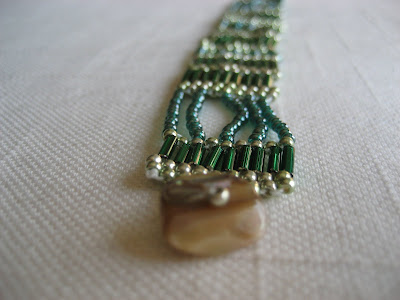
There are two things that I like about this one: 1) its texture, with all those bugle beads (the long cylindrical ones) lined up like ribs, and 2) all the different greens I used in it. This one, maybe more than anything else I've made, I just do not get tired of looking at.


3. This necklace I made as a showcase for some nifty glass beads I found (mumble) years ago:
4. Another bracelet, which came out a bit messy, that I made trying to come up with a way to use some of the extra agate beads I didn't use making this or this: ... and 5. A big old cuff bracelet I made to match this necklace:

*Not really wearing it, since I made it to fit a smaller wrist than mine, which my sister says is larger than most women's by about an inch. I have draped the bracelet over my wrist to model it, applying pressure strategically to keep it wrapped around, rather than just lying on, this overlarge extremity.

Saturday, February 26, 2011

Graphical Humor

Andrea linked to this post on Indexed, a blog whose entries consist of graphs and Venn diagrams making various weird/funny/trenchant comparisons between different categories of things.

I'm not going to reproduce any of the images here --- that would be taking pageviews away from Jessica Hagy, who draws them and who appears to make money from her website, so for her a pageview is more akin to someone walking into a shop she owns, rather than just a way to gauge how many people read her, as they are to me --- but I will link to some of the ones I liked the best:
Please sir, I want some more.
Covens & convents.
We'll just get a new one.
Nothing is for everybody.
A little something for the pagans.

The whole concept of the site reminds me a lot of this old strip from xkcd ...

Friday, February 25, 2011

Testosterone and Estrogen Have Opposite Effects on Expression of a Gene Thought to be Underexpressed in Autism

ResearchBlogging.orgKev at Left Brain/Right Brain linked to this press release describing a new study published last week in PLoS ONE, that builds on several previous studies comparing gene expression in autistic people and their non-autistic siblings.

This study focuses on one gene, RORA, whose product is a steroid hormone receptor that also acts as a transcription factor. Previous studies had identified this gene as one that is expressed to a lesser degree in autistic people than in their non-autistic siblings; two studies compared the amount of mRNA (the product of DNA transcription, which serves as a template for protein synthesis) corresponding to certain genes that was present in cells taken from autistic people and their siblings, while a third study compared levels of DNA methylation (i.e., inactivation; methylated DNA is harder to transcribe) between those two groups. Only the third study mentions RORA, but the other two identify clusters of genes whose products do similar things, and are involved in similar processes, to RORA.

This study looks at the regulation of RORA by steroid hormones; its authors --- Drs. Valerie Hu and Ray-Chang Wu, along with grad students Terawit Sarachana and Minyi Xu --- found that both estrogen and testosterone affect its functioning (as assessed by bathing cultures of cells with solutions of varying strengths of either hormone, and then using qRT-PCR to determine how much RORA mRNA was produced under each condition), and that their effects are directly opposed to one another: testosterone suppresses the transcription of RORA, while estrogen enhances it.

They also found sequences within another gene --- that for aromatase, an enzyme that converts testosterone into estrogen --- that are the same as those making up RORA binding sites in other genes, which indicates that RORA might be involved in regulating the production of aromatase.

Given this, Sarachana and colleagues see the potential for a feedback loop: in the presence of testosterone, RORA is less active, which could mean that less aromatase is produced, which would mean more testosterone accumulates, leading to even more suppression of RORA.

Figure 5, in Sarachana et al., 2011 --- diagram showing the up- or down-regulation of RORA by the steroid hormones estrogen and testosterone, and the regulation of aromatase, and therefore estrogen synthesis, by RORA

(There's also a potential feedback loop involving estrogen, which up-regulates RORA, which up-regulates aromatase, which in turn produces more estrogen).

There was an upper limit to the dose-response effect of either hormone, though: for both, it was the 1-nanomole/L solution that had the strongest effect on RORA transcription, which seems to suggest that at very high concentrations of testosterone, RORA transcription might creep back upward.
Figure 1, in Sarachana et al., 2011; graphs showing the relative amounts of RORA expressed when cells are treated with three different strengths of a solution of either dihydrotestosterone (C) or 17-beta-estradiol (A), and also changes in expression of RORA over time following treatment with 1-nM solution of DHT (D) or estradiol (B)

Given that RORA has already been found to be less active in autistic people than it is in their non-autistic siblings, the suppression of RORA by testosterone provides a possible biological mechanism underpinning the greater prevalence of autism among males than females, and also associations found between higher levels of testosterone exposure in utero and later development of autistic traits.

There is some evidence for this proposed relationship; Sarachana and colleagues also assayed(post-mortem) brain tissue from autistic (n = 12) and non-autistic donors (n = 22), measuring both RORA and aromatase levels by immunofluorescence. They found two things that would tend to support their low RORA --> low aromatase --> more testosterone hypothesis: RORA is indeed present in smaller amounts in the brain tissue from autistic donors, and aromatase levels are strongly correlated with RORA levels in all the brains that were analyzed.
Figure 4A, in Sarachana et al., 2011; comparison between representative samples of brain tissue labeled to show either RORA (red) or aromatase (blue) expression. The top two samples come from female donors; the bottom two come from male donors. The second and fourth sample (one male, one female) come from autistic donors; the first and third come from age-matched non-autistic donors. You can see that the samples from the autistic donors are dimmer than the control samples; less color indicates less of the compound being assayed for, since the fluorescent molecule is attached to an antibody that will only bind to the protein of interest (RORA or aromatase, in this case).
Figure 4C, in Sarachana et al, 2011; graph showing the relationship, R2, between the concentration of RORA and the concentration of aromatase present in tissue samples from both autistic and non-autistic donors

Now, if you're like me, you'll be wondering how strong the evidence is that a non-trivial proportion of autistic people actually do underexpress RORA. While the immunofluorescence assay of the tissue samples didn't falsify the hypothesis that autistic people's brain cells would produce less RORA and aromatase, because it involved only 34 brains, its findings can't be extrapolated to autistic people in general (or even to a specific subgroup of autistic people in general) without gene-expression data from a larger, more representative autistic sample.


In this article, Valerie Hu and her co-author Mara Steinberg describe a new method for sorting autistic study participants into subgroups based on how they scored on individual questions on the Autism Diagnostic Interview (ADI-R). The rationale for this, which Jon Brock has elegantly demonstrated on his blog, is that two people can both meet diagnostic criteria for autism without having even a single trait in common. So Hu and Steinberg's method is supposed to sort autistic people into groups with the people whose clinical profiles most match their own.

They came up with four categories: people with severe language impairment, people with savant skills, people with relatively mild symptoms distributed across all the ADI-R domains (i.e., language, nonverbal communication, social interaction, play skills, interests and behaviors, physical sensitivities and mannerisms, aggression, and savant skills), and people with intermediate (i.e., neither mild nor severe) symptoms who were also less likely than the other groups to have savant skills. Three of these groups were chosen for inclusion in later gene-expression studies: the language-impaired group, the savant group, and the mild-autism group. Other people weeded out of the gene-expression study population were people whose autism was part of a genetic syndrome, like Rett syndrome or Fragile X, people with other psychiatric diagnoses, people who were born prematurely, people with significant cognitive impairment, and female people (!).

(I suspect the last group --- women and girls with autism --- were left out just because there were so few of them. Of the 1,954 people who were sorted into groups, only 428 were female.)

Once all the potential confounders were weeded out, the researchers had cell lines derived from 86 autistic individuals --- 31 in the language-impairment group, 26 in the mild-autism group, 16 in the savant group, and 13 who apparently met inclusion criteria for both the savant and language-impairment groups --- which made up the autistic sample in this study, contrasted with 30 non-autistic controls. The other study Sarachana and colleagues cite as providing evidence of RORA underexpression in autistic people is this one, which predates Hu and Steinberg's method for dividing autistic people into subgroups; its population, since it is composed of identical twins, is a lot smaller: just six sets of twins (five with at least one twin diagnosed with autism) and non-autistic siblings of two of the sets of twins --- fourteen people overall.


So, while the model Sarachana and colleagues propose --- a predisposition for autistic people to suppress expression of RORA, which both creates and is reinforced by a high-androgen environment --- is really interesting, and could shed light on 1) how male and female autistics differ and 2) what the male:female ratio within autism might be in a perfect world where diagnostic criteria weren't geared more toward men and boys, I'd like to see the underexpression-of-RORA finding replicated in a bigger study.

Sources:
Hu, V., Frank, B., Heine, S., Lee, N., & Quackenbush, J. (2006). Gene expression profiling of lymphoblastoid cell lines from monozygotic twins discordant in severity of autism reveals differential regulation of neurologically relevant genes BMC Genomics, 7 (1) DOI: 10.1186/1471-2164-7-118

Hu, V., Sarachana, T., Kim, K., Nguyen, A., Kulkarni, S., Steinberg, M., Luu, T., Lai, Y., & Lee, N. (2009). Gene expression profiling differentiates autism case-controls and phenotypic variants of autism spectrum disorders: evidence for circadian rhythm dysfunction in severe autism Autism Research, 2 (2), 78-97 DOI: 10.1002/aur.73

Hu, V., & Steinberg, M. (2009). Novel clustering of items from the Autism Diagnostic Interview-Revised to define phenotypes within autism spectrum disorders Autism Research, 2 (2), 67-77 DOI: 10.1002/aur.72

Sarachana, T., Xu, M., Wu, R., & Hu, V. (2011). Sex Hormones in Autism: Androgens and Estrogens Differentially and Reciprocally Regulate RORA, a Novel Candidate Gene for Autism PLoS ONE, 6 (2) DOI: 10.1371/journal.pone.0017116

Monday, January 31, 2011

Too Many, Too Soon?

EXECUTIVE SUMMARY: One of the misgivings about current early-childhood vaccination recommendations is that they involve exposing infants to so many infectious agents. While there's already been research into the effect of multiple vaccines on the immune system, Smith and Woods (2010) are the first to look at whether getting lots of vaccinations very early in life might have any effect on the nervous system.

Using the vaccination records and neuropsychological data on a group of children born between 1993 and 1997 that were gathered and made publicly available for an earlier vaccine-safety study, they did two different group comparisons between children who had received all the recommended vaccines on time and children who hadn't. They found no ill effects of exposure to lots of different vaccines within the first seven months of life; the only effects of earlier vaccination on neuropsychological development that they found were beneficial ones, but these mostly did not survive controlling for other demographic variables.
_____________________________________________

ResearchBlogging.orgIn an interview with The Thinking Person's Guide to Autism editor Shannon Des Roches Rosa, Autism's False Prophets and Deadly Choices author Dr. Paul Offitt mentioned a study published last May in Pediatrics that addresses the "too many, too soon" version of the vaccines-cause-autism hypothesis.

Some parents of very young children, while they might not believe that any single vaccine is dangerous, notice that a lot more vaccines are recommended within the first six years of life now than there used to be, and wonder whether it might damage a child's immune system to expose that child to so many antigens within such a short period of time*.

While there was already evidence that the current vaccine schedule is safe from an immunological standpoint, Smith and Woods (2010) are the first researchers to look at its potential impact on the developing nervous system.

Their study re-analyzes data gathered for an earlier study looking at neuropsychological outcomes in 7-to-10-year-old children exposed to thimerosal in vaccines; those researchers recruited children from four HMOs participating in the CDC's Vaccine Safety Datalink project, tested them on 42 measures of neuropsychological outcomes (which broadly fell into seven domains --- speech and language, verbal memory, fine motor coordination, attention/executive functioning, behavioral regulation, tics, and general intelligence --- and also included two other tests, one of visuospatial ability and another of letter and word identification; see Table C, or pages 9-11 of this document, for a complete listing), and looked for relationships between a child's performance on those tests and the amount of thimerosal that child had been exposed to, as estimated from vaccination records.

That study didn't find much of an effect for early thimerosal exposure --- it found a small scattering of statistically significant effects, but those effects were 1) often not the same in boys and girls, or in children belonging to different HMO groups, 2) evenly divided between higher mercury exposure --> better outcome and higher mercury exposure --> worse outcome, and 3) very small. That suggests to me that many of those associations might simply have been noise.

What's more important in terms of whether the "too many, too soon" hypothesis holds water is the raw data those researchers collected --- complete vaccination records and neuropsychological test results for 1,047 children. The existence of those data allowed Drs. Michael J. Smith and Charles R. Woods to look for relationships between timing of vaccination in early infancy and later neuropsychological outcomes.

They compared outcome data for the 491 children who got all the recommended vaccines on time (which they defined as within 30 days of the recommended age, given in months, on the CDC's vaccination schedules for 1993-1997) with the data for the rest of the children (who fell into two categories: those who had gotten all of the recommended vaccines, but just didn't get them at the recommended time, and those who hadn't gotten all the shots by the time they participated in Thompson et al.'s study), finding that children who got all their recommended shots on time performed better than the other children on 12 of the 42 outcome measures --- the Boston Naming Test, the grooved pegboard (a test of fine-motor coordination), the metacognition subscale of the Behavior Rating Inventory of Executive Function, teacher ratings for inattention and hyperactivity, parent rating for stuttering, and verbal, performance and full-scale Wechsler IQ. There was no measure on which they performed worse than the less-vaccinated group.

Because there were demographic differences between the families of children who were vaccinated on time vs. children who weren't, the researchers also did a multivariable analysis to try and control for those factors. That analysis found only two (small) between-group differences, but both of these were also in the fully-vaccinated kids' favor. (They scored 1 point higher on the speeded-naming subtest of the Developmental Neuropsychological Assessment's Language and Communication domain, and also tended to have slightly higher performance IQs).


They also did a secondary analysis, dividing the study participants into three groups, based on "timeliness" of vaccine receipt. The "most timely" group (n = 310) was created by dividing all the children who'd gotten all 10 of the vaccines recommended for the first year of life into quintiles based on how old they were when they completed the schedule. The first two quintiles, or the 40% of children who completed the schedule earliest (i.e., within the first seven months of life), constituted the most timely group, while the children who had gotten six or fewer of the ten recommended vaccines by the time they were seven months old made up the "least timely" group (n = 112).

(The rationale for doing this secondary analysis was to look for any effect of spacing all the vaccinations really close together --- the children in the "most timely" group had crammed the ten first-year vaccines into the smallest window of time. Similarly, the group they're being contrasted with represents the opposite extreme in terms of vaccine compliance --- these are the children who've gotten the fewest shots within that same seven-month window of time. If there is a spacing effect, it ought to show up in a comparison between those two groups, if it shows up anywhere.)

The results of the secondary analysis were a lot like those of the primary analysis: univariate analysis turned up fifteen outcome measures on which the most-vaccinated children outperformed the least-vaccinated ones (including most of the same measures identified as showing a difference between groups in the primary analysis), while multivariate analysis found no difference between the groups. Overall, this study failed to find evidence of any deleterious effects of multiple vaccinations on neuropsychological development, even when those vaccines are spaced very close together very early in life.

(One of the potential objections the authors deal with in their Discussion section involves the fact that the vaccination schedule has changed since the mid-1990s, but they figure that, since most of the children in their study received the version of the combined diphtheria, tetanus and pertussis vaccine that includes whole-cell pertussis, their overall antigenic load would be heavier, not lighter, than what children are exposed to today. See my note below for more explanation about changes in the pertussis vaccine.)


Sources:
Smith, M., & Woods, C. (2010). On-time Vaccine Receipt in the First Year Does Not Adversely Affect Neuropsychological Outcomes PEDIATRICS, 125 (6), 1134-1141 DOI: 10.1542/peds.2009-2489

Thompson WW, Price C, Goodson B, Shay DK, Benson P, Hinrichsen VL, Lewis E, Eriksen E, Ray P, Marcy SM, Dunn J, Jackson LA, Lieu TA, Black S, Stewart G, Weintraub ES, Davis RL, DeStefano F, & Vaccine Safety Datalink Team (2007). Early thimerosal exposure and neuropsychological outcomes at 7 to 10 years. The New England journal of medicine, 357 (13), 1281-92 PMID: 17898097


*Actually, while it looks like we're throwing more things at young children's immune systems now than before, when you just look at the number of vaccines children receive now versus thirty years ago, the composition of vaccines has changed, too, so that each vaccine now contains fewer antigens than they used to. Looking at this table in a 2002 review on vaccine safety by Paul Offitt and colleagues, the switch from using the whole bacterium that causes whooping cough, Bordetella pertussis, to just using the toxin it secretes cut the number of distinct antigens in the pertussis vaccine from around 3,000 to just two to five (depending on how many other bacterial cell components are still mixed with the active ingredient, the toxin). That whole-cell pertussis vaccine looks like the proverbial pig in the python, swelling the total number of antigens in all the recommended vaccines to 3,000+ during the time period in which it was used. Now, with the adoption of the acellular pertussis vaccine, the total number of antigens in all the early-childhood vaccines is about 125, give or take a few. So the question of antigen overload is actually a lot more complicated than just comparing the number of vaccines recommended at different points in time, and, if anything, a closer look seems to tell us that young children's developing immune systems are less overloaded by the current vaccine schedule, not more.